
1950S
Tape Delay
• Delay is created by recording audio onto magnetic tape and then playing it back
• Delay time would be changed by moving the playback head on the tape machine or changing the speed of the tape
· Most common method of creating delay in the 50s and 60s
• Echoplex
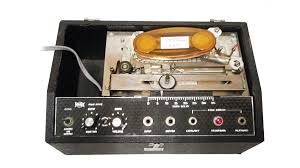
Echoplex
Slapback Delay
• Type of delay effect with a single repeat (feedback = 0%)
• Delay time between 80-200ms
• Creates a percussive effect common on 50s vocals and electric guitar tracks
1960s
Analogue delay
· Standalone delay units using analogue technology were used to create delay effects
· The development of these units was mainly due to the increase in the popularity of delay as an effect
· Types of analogue delay included :
- Oil Can Delay
- Drum Delay
- Acoustic Delay

Binson Echorec 2 (Drum Delay)
1970s
Bucket Brigade Delay (BBD)
• Delay is created by storing the original audio signal onto bucket brigade chips
• Each capacitor would hold the signal for a set time before it moved on

MN3001 BBD chip
Bucket brigade is more reliable than Tape
Bucket brigade carries more noise as the delay time increases
1980S
DIgital Delay
• Original audio is stored digitally in the unit’s memory
• Allows for delay times to be tempo synced to a project (common in dance music)
• Can be automated and controlled via MIDI
• Can store pre-sets
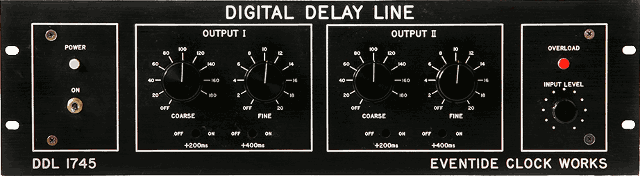
DDL 1745
Multi-tap Delay
• A type of digital delay that allows for several delay times to be used in one unit
Ping-pong/stereo delay
• A type of digital delay that allows for the delayed signal to be panned
Modulated Delay
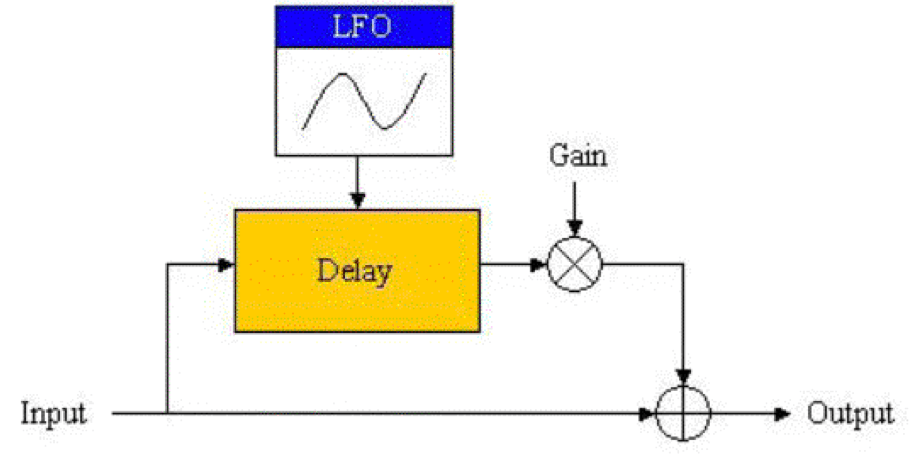
· Delay effects that are created through the modulation of delay time
· An LFO is used to control how much of the wet signal is delayed over time
· Chorus, Phaser and Flanger are all examples of modulated delay effects
No maintenance
More precise delay times than Analogue delay (in ms)
Clearer sound quality than Analogue delay units
In 1970 would have been much more expensive than BBD
Wider Context Topic Timelines – Delay
Why not check out one of these videos below to gain some wider knowledge:

 WLFS Music Technology