1930s
• Amplifiers had existed before the first electric guitars were being developed and were used to amplify other acoustic instruments
• Guitarists found themselves being drowned out by larger jazz ensembles, leading to them installing pickups onto their instruments which could be fed through amplifiers
• These early amplifiers were designed for radio and PA systems and needed large batteries to run them
- These systems were often very large and expensive, making them inaccessible to most musicians at the time
- They were also unreliable when it came to providing a substantial boost in the volume of the signals being amplified
• In the early 1930s, amplifiers started to move away from battery power and began to be powered by capacitors and vacuum tubes, allowing for them to be reduced in size
- Inventors George Beauchamp and Adolph Rickenbacker began to modify the designs by using pick-ups rather than the microphones used on earlier PA systems

1920s Magnavox Speaker and PA System
Amplifiers at this time were equipped with 10 watt speakers which did not have enough power to produce the desired volume level for electric guitarists
1950s
• Electric guitars and amplifiers began to rise in popularity due to improvements and refinements being made to them
• The electric guitar began to characterise the sound of popular genres of the time such as Rock’n’Roll and guitarists like Chuck Berry began to experiment with distortion
- Some of this distortion came about due to the bad manufacture quality of the amps
- This distortion resulted in a thicker, more harmonically rich sound
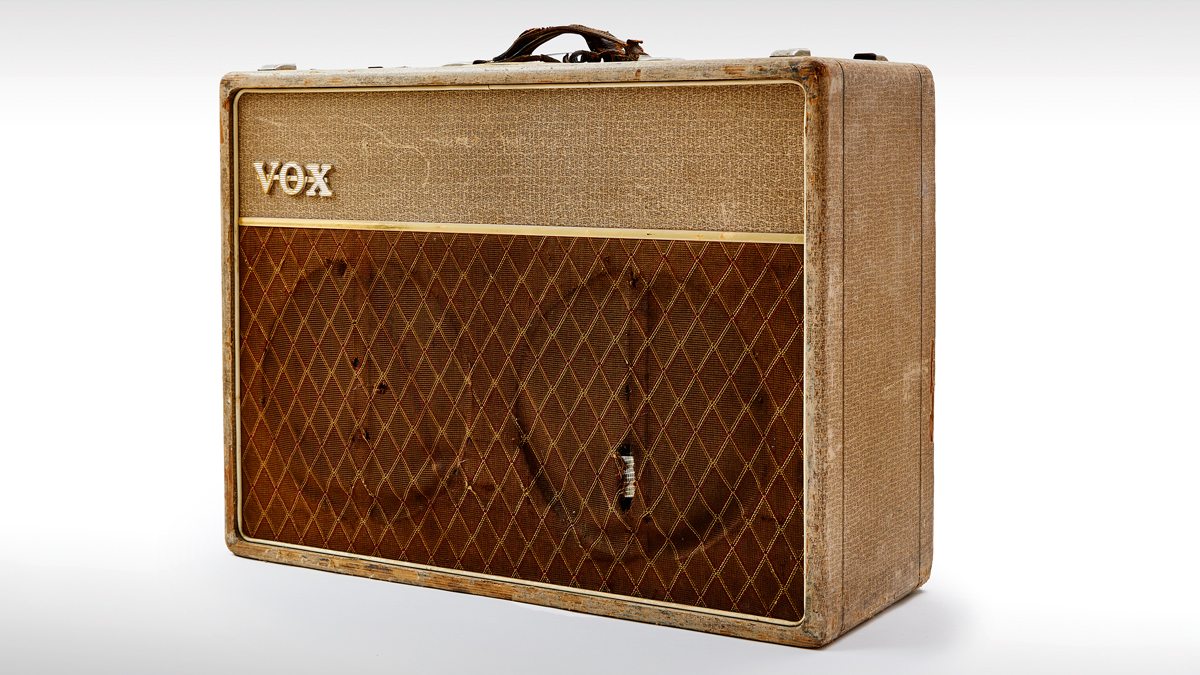
Vox AC-30 Amplifier
Vibrato and Reverb began to be included as parameters in amplifiers
When performing to large audiences, these amplifiers would still need to be mic’d up
1960s
• The song ‘You Really Got Me’ by The Kinks pioneered a distortion technique when Dave Davies slashed the speaker cone on his amplifier
• Other musicians discovered another technique to achieve a distorted sound, overdriving the amplifiers
- Overdrive was achieved by ‘overdriving’ the power valves in an amp, this would push the amp past its capacity causing the signal to clip
- Overdrive on valve amplifiers tended to be warmer due to them soft clipping the signal
• The ease of achieving overdrive was mainly due to the cheap quality of the speakers being used
• Solid-state/transistor amps began to make an appearance

Elpico Amplifier used by Dave Davies
Amplifiers were now being used as effects units on top of boosting the signals of instruments
1970s
• Amp set ups got larger in both size and volume production
- This lead to an increase in audience sizes and an explosion in the concert industry as a whole
• Solid-state/transistor amplifiers began to increase in popularity and as a result reduce the popularity of valve amplifiers
- Transistors were more reliable, efficient, smaller and cheaper than valves
- They were however unable to achieve the warm-toned overdrive due to their lack of analogue technology, resulting in a harsher-toned overdrive
• Synthesisers were becoming widely used at this time and would also be used together with an amplifier
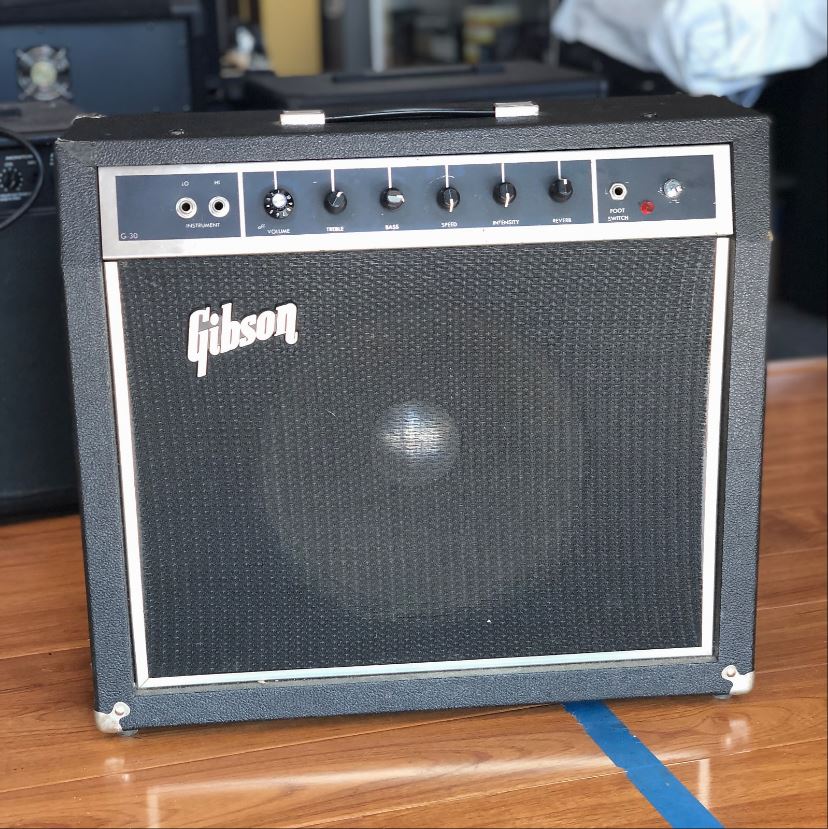
Gibson G30 Vintage Solid State Amplifier
Instrument amplification has changed very little since the late 60s/early 70s
Wider Context Topic Timelines – Amplifiers
Why not check out one of these videos below to gain some wider knowledge:

 WLFS Music Technology